
Rental and mobility
Today's driver is not tomorrow's. The report has to travel with the vehicle.
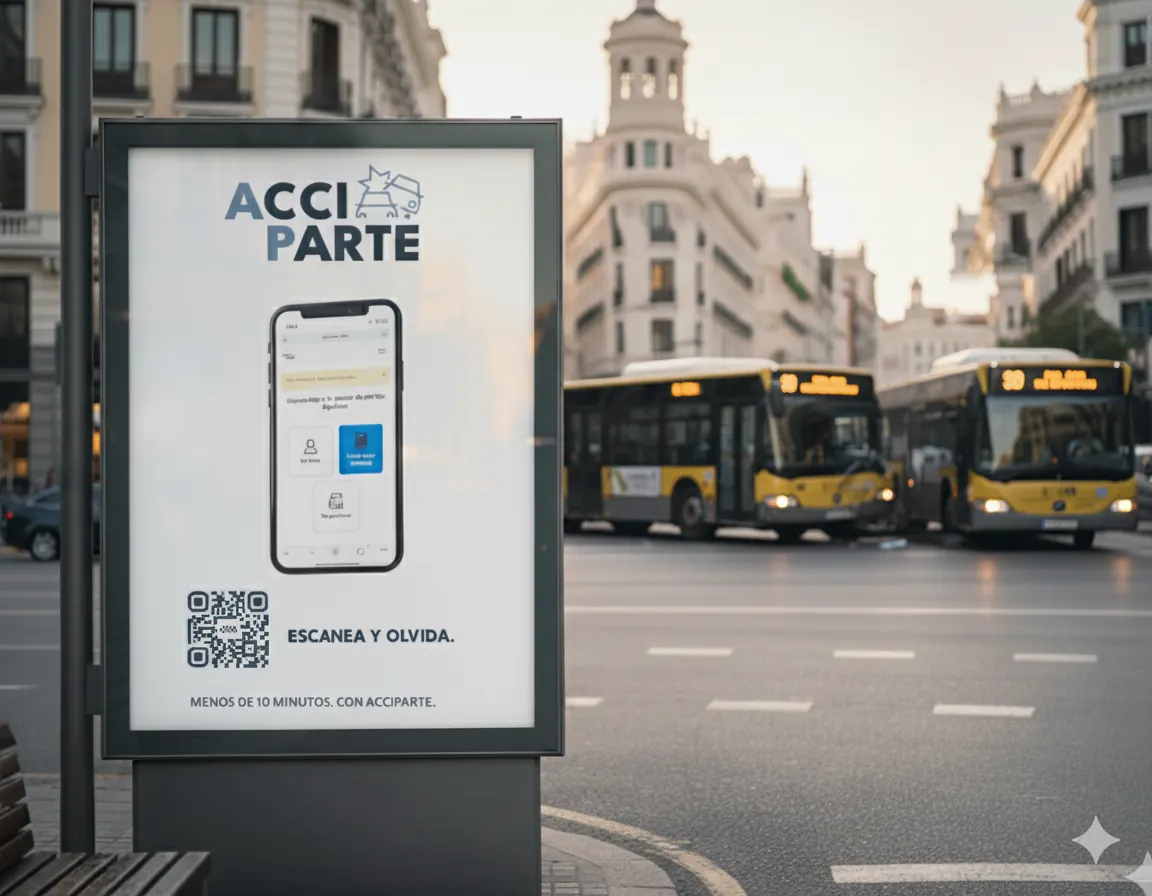
Rent a car, shared mobility, ride-hailing and passenger transport share one problem: the driver does not know the vehicle, does not know the company, and will not install anything. The only constant is the vehicle. That is why the identifier lives on it.
The situation
High turnover, high frequency, and a customer who leaves tomorrow
A foreign customer with a bump in a rental car does not know what to do, does not speak the other driver's language, and has a flight in two hours. The report that reaches the office is whatever they managed to do, if they did anything at all.
With the QR code on the vehicle, the customer opens the report in their own language from their phone's browser, with the number plate, insurer and handover office already loaded. Photographs at the scene, sketch and the other party's signature from their own phone. The office receives the claim file before the customer returns the keys.
For shared mobility and ride-hailing, every vehicle has its identifier and every driver their username. The company knows which driver made the report, when, and with what photographs, and claims data is consolidated by vehicle and by driver.
For coaches and passenger transport, the report includes passengers as witnesses, and the claim file isolates health data as a special category from the very first field.
| Operation | Common problem | What the vehicle identifier provides |
|---|---|---|
| Rent a car | A customer who does not know how to complete the report and is leaving the country | A multilingual report in the browser, with the office as recipient |
| Shared mobility and ride-hailing | Drivers who rotate, unidentified damage | A report tied to an identified driver, claims data by vehicle and driver |
| Coaches and passenger transport | Passengers involved, sensitive data | Passengers as witnesses, health data isolated |
What changes
What the claim file resolves in this deployment
The report in the driver's own language
The form follows the European model of the accident statement. The customer completes it in their language, and the other party in theirs.
The identifier travels with the vehicle
The driver changes, the configuration does not. The office, insurer and workshop live on the vehicle, not on the person.
Notification before return
The office receives the claim file within minutes and knows what damage is coming before the keys arrive.
An identified driver
In shared mobility and ride-hailing, every report is tied to the driver who made it. No disputes over who was driving the vehicle.
Claims data by vehicle and driver
A basis for talking to the insurer and for making fleet decisions with your own data.
Sensitive data kept out of the circuit
Passengers and injured parties as a special category, isolated and only shared with case-by-case consent.
See the report with a customer who rented this morning
Thirty minutes with a rental vehicle, a driver who installed nothing and the claim file at the branch.
Getting started
Three steps and weeks, not months
Onboarding and fleet upload
The company uploads its vehicles with policy, insurer and recipients. Once.
Identifiers on the vehicles
One QR per vehicle, physical or digital, and credentials for each driver. No classroom training.
First real report
From the first accident the claim file reaches whoever the company decided. Reviewed after thirty days.
Calculator
What the gap between the crash and the first data costs
Use your own assumptions. The estimate is yours, not ours, and it is not a promise of results.
Second column assumption: the complete report arrives the same day (0.25 days) and admin time per report drops to half an hour. Adjust the assumptions to your case.
See this with my fleetFrequently asked questions
Frequently asked questions
Can a foreign customer complete the report in their own language?
Yes. The report follows the European model of the accident statement, identical across the whole Union, and the form is shown in the driver's language.
How is a driver who changes every day identified?
In rent a car, access is by vehicle and the customer identifies themselves in the report. In shared mobility and ride-hailing, every driver has their own username and the report is tied to them.
What happens if the customer does not complete the report?
The identifier on the vehicle and the instructions at handover raise the rate of reports made at the scene. Whatever is not declared still shows up at the return inspection, but with fewer cases and with reference photographs.
Does it work for damage against fixed objects?
Yes. The unilateral report covers collisions with no other party, with photographs and location, and still generates a claim file.
Can passengers be included?
Yes, as witnesses. Health data for injured parties is isolated as a special category and does not circulate under policy-based permission.
Related
Product
Guided capture at the scene, official PDF statement, unique reference, permissions by segment, admin panel and automatic distribution to every party.
Keep readingDrivers
What to do at the scene, what to photograph, what not to sign and what happens next with your claim file. A guide for drivers who scan the Acciparte QR code.
Keep readingWhy nobody installs the claims app (and what gets used instead)
There is one variable that separates digital report projects that get used from those that do not: whether anything has to be downloaded.
Keep readingCompany fleets
The driver completes the report via the vehicle's QR code, no app, no need to know who insures it. The fleet gets the claim file in minutes, with photographs.
Keep readingNext step
See the digital accident report working on one of your vehicles
A 30-minute demo with a real vehicle from your fleet. No installation and no commitment.